
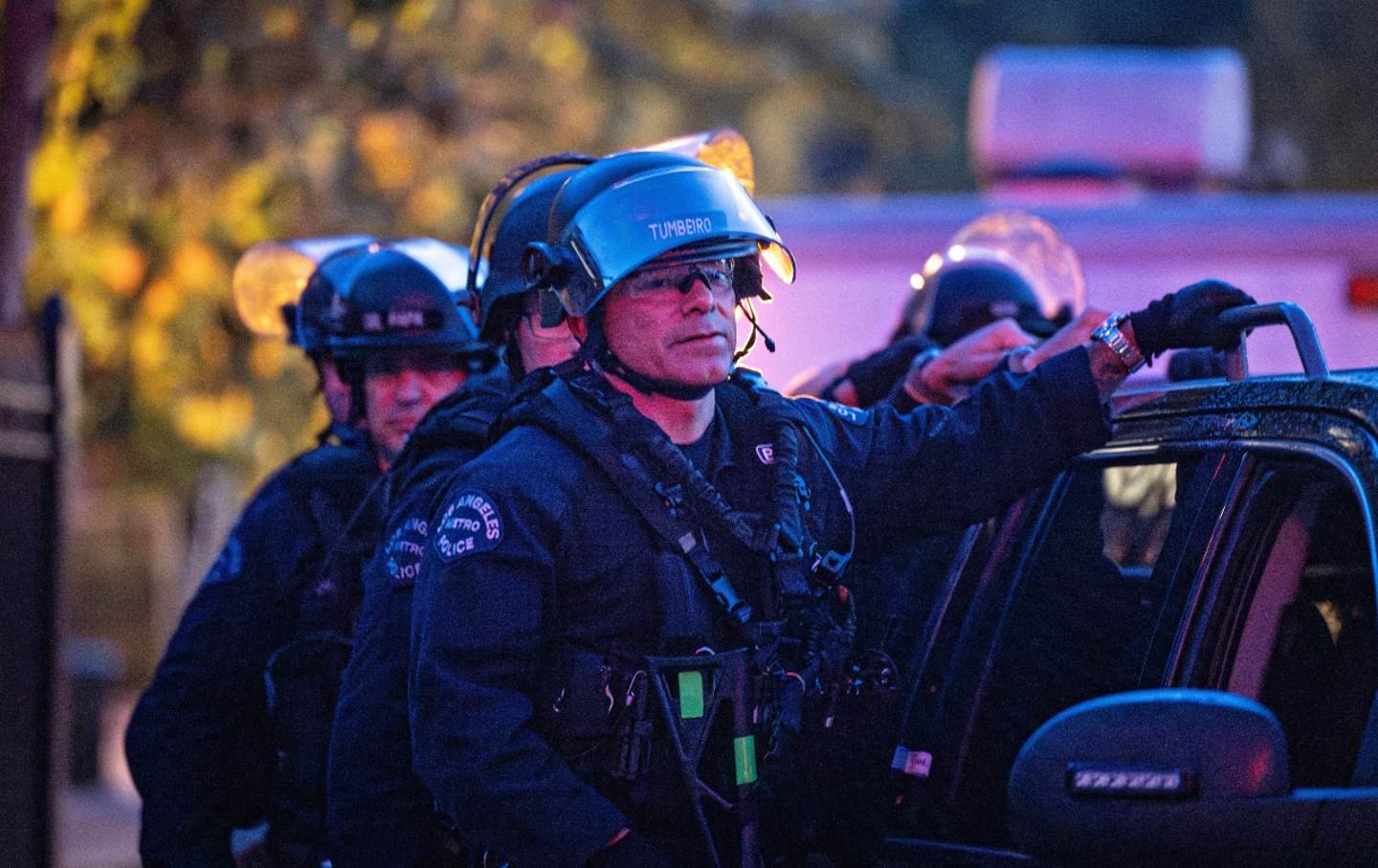
Applying the tactics of counterinsurgency warfare to peaceful domestic protest risks blurring the line between Trump and his opponents.
On a cool evening in late April, a young woman stood on the ledge of a fountain at the University of Southern California, her face covered by a large black mask. Police helicopters thundered overhead. The woman’s voice rose over the roar of the choppers as she read out the names of the dead…
Mira and her family were displaced in Rafah where they thought they would be safe as their home in Khan Younis was destroyed by Israeli bombs. However, Israeli bombing followed them to Rafah, and little Mira was killed on December 13, 2023…
Dozens of students at USC’s Alumni Park sat cross-legged in a semicircle beneath the fountain, listening intently. Their faces were obscured with keffiyehs to protect their identity.
Jamal Mahmoud Kasanah, a 5-month-old baby, died of hunger on January 25, 2024, as the family lacked access to food and water amid the ongoing genocide and Israeli blockade in Gaza…
The names—of mothers, babies, old men, artists, and laborers—came from the toll of 36,000 Palestinians killed by American weapons in Israeli air strikes, and the resulting starvation in the days since Hamas’s October 7 attack in Israel.
As the helicopters hovered overhead, a quarter-mile away, at the edge of campus, four dozen LAPD cruisers loaded with riot gear and “less lethal” weapons—tear gas, rubber bullets, projectile launchers, zip ties—were poised to enter the campus and make mass arrests. Still, the students held their ground, listening quietly as the woman read the names.
Javan al-Khafadnah… Dr. Mohammed Bahed al-Bono… Hassan El Nubuh and his wife, along with their children, Mohammed and Leiah…May they be reunited with their family in paradise….
A Perfect Metaphor in the Age of Repression
The eerie cinematic tableau that unfolded that Saturday night on the USC campus, just steps from my office at the journalism school, encapsulated a perfect metaphor of struggle in the age of campus repression. On one hand, students of conscience bore witness to an unconscionable slaughter halfway around the world. On the other, at USC and dozens of colleges across the country, the police apparatus of a liberal consensus acted swiftly and violently to shut the students down, smearing them, disingenuously, as lawless antisemites.
Current Issue
The schools’ actions are part of an unforgiving strategy toward students who threaten university investments and the wealth of their donors and boards of trustees. USC’s billionaire-laden board includes mega-developer Rick Caruso (a former mayoral candidate and host of Los Angeles–based pro-Israel galas) and Trump-backer Miriam Adelson (a far-right, pro-settler Israeli-American who advocates Israel’s annexation of the West Bank). Caruso publicly backed USC’s police action, and it’s unlikely many of his fellow trustees would disagree.
Yet in the war at home over Gaza, overwhelmingly peaceful student gatherings, with their meditation, yoga, and kite-making workshops, their teach-ins and Black-Palestinian solidarity sessions, their Passover seders and large presence of young Jews of conscience, are falsely depicted as encampments of violence, hatred, and antisemitism. Students have been doxxed, censored, threatened with expulsion, have seen job offers withdrawn, and in some cases been assaulted and sent to the hospital by far-right protesters, while police stood idly by for hours. Meanwhile, prominent Democrats in Congress—their war chests fattened by millions in pro-Israel campaign donations—back bills that would make it illegal to criticize Israel. The two top Democrats in Congress, Chuck Schumer and Hakeem Jeffries, along with their GOP counterparts, even invited Benjamin Netanyahu, sought as a war criminal by the International Criminal Court, to come to Washington to share Israel’s “vision for defending democracy.”
All this, in the face of what Israeli journalist Amira Hass calls the “unprecedented ruin and desolation in the Gaza Strip.”
But the strategic hollowness of these self-styled liberals could produce far-reaching consequences—all the way to the November presidential and congressional elections, and beyond. In a campaign where Democrats seek to contrast their values with those of Trump and his neofascist supporters, supposedly liberal Democrats are alienating a significant proportion of the electorate—not only young students of conscience and of color but also Black churches and elderly white Midwesterners horrified by the images coming out of Gaza. As the stakes rise, the distinctions are blurring, and the liberals have only themselves to blame.
How Did This Happen?
This centrist Democratic strategy fits into a larger, longer-term, bipartisan alliance that views protesters as the enemy, and their tactics as a threat to the fundamental interests of our militarized, fossil-fuel-dependent society.
The repressive bipartisan playbook is partly rooted in the 2001 Patriot Act, rushed through and passed overwhelmingly on the wave of fear following the 9/11 attacks on the World Trade Center and the Pentagon. The law led to increased racial profiling, sweeps of millions of private phone records, and a vast expansion of the government’s ability to spy on ordinary citizens. Simultaneously, decommissioned military hardware from the wars in Iraq and Afghanistan flowed to local police and sheriff’s departments, allowing them to deploy bayonets, riot shields, grenade launchers, sound cannons, sniper scopes, detonator robots, and tank-like Mine-Resistant Ambush Protected trucks known as MRAPs. (Some of this equipment was restricted under President Obama, then allowed again under Trump.) Hence local police and sheriff’s offices, moving in military-like formation in places like Ferguson (after the police killing of Michael Brown), Minneapolis (after the murder of George Floyd), and the Standing Rock Sioux reservation during the Dakota Access Pipeline protests, confronted unarmed citizens as if they were Middle East insurgents. In other words, like the enemy.
At Standing Rock, on a frigid North Dakota night in November 2016, I saw a line of combat-ready police deploying tear gas, rubber bullets, flash-bang grenades and fire hoses on scores of unarmed protesters. The militarized force, ostensibly public servants, functioned essentially as the private security detail of an oil pipeline company. Dozens of protesters suffered hypothermia that night on the subfreezing Dakota plain. One nearly had her arm blown off. Another was shot in the eye with a tear-gas canister, nearly blinding her; she would face six surgeries.
After Standing Rock, and continuing through the George Floyd protests, state legislatures began passing dozens of restrictive anti-protest bills in a broad effort to suppress dissent nationwide. In Florida, starting on July 1 it will be a felony to trespass near a pipeline. A similar trespassing law is in place in Wisconsin, with penalties of up to six years in prison. Pipeline protesters in North Carolina could get 15-year sentences. The Oklahoma legislature passed a law allowing drivers to “unintentionally” run over protesters blocking a road.
Meanwhile, Back at the Ivory Tower…
The culture of militarized policing has now become entrenched on college campuses across the country, in some cases revealing deep ties between universities and local police. In New York, Mayor Eric Adams, an ex-NYPD cop, sent in police to violently suppress protesters at Columbia University. The police were summoned at the request of Columbia’s president, Minouche Shafik. It later emerged that a group of pro-Israel “billionaires and business titans” pressured Adams to send in the NYPD. In late May, after police were seen mercilessly beating Gaza solidarity protesters in Brooklyn, Adams praised his former colleagues. “I take my hat off to the police department, how they handled an unruly group of people.”
At USC, the senior vice president in charge of “safety and risk assurance,” Erroll Southers, is a former FBI agent and the author of Homegrown Violent Extremism. More importantly, Southers is also president of the Los Angeles Police Commission, which oversees the LAPD. He also has ties to Israel’s security state, through the International Institute of Counter-Terrorism, based near Tel Aviv. LAPD itself has trained with Israeli security forces, starting as early as 2002. In 2010, the Anti Defamation League arranged a trip with senior LAPD, NYPD, and other police officials “to learn how Israel’s police, intelligence and security forces prevent terror attacks.” And in 2014, eight senior LAPD brass visited Israeli security, cyber-intelligence, and drone companies “that can intercept and instantly analyze” video, audio, and text. “They are our allies,” said then–LAPD chief William Bratton. “They are the best at what they do.”
Quite likely not on the agenda of the LAPD’s Israel junkets: a review of the country’s abysmal human rights record in the Occupied Territories, its “administrative detention” practice of holding Palestinians in jail without charge for months at a time, and the appalling civilian casualty tolls it inflicted in a series of wars on Gaza going back to 2008.
It’s impossible to know exactly how Southers’s experience with the LAPD, the FBI, and Israel’s counterterrorism establishment shaped his view on how to handle peaceful Gaza solidarity protests on his own campus at USC. He declined a request for comment. But his own words reveal a sweeping definition of those vulnerable to “homegrown violent extremist radicalization.” In 2017 congressional testimony, he flatly stated: “An American who embraces a Muslim Identity ideology within the United States is a home-grown violent extremist.” Later, in a report for USC’s Homelands Security Center, Southers and his coauthors warned that such extremist indicators include people “strongly identified with Muslims as being victimized (Palestinians, Iraqis…)” and those who “harbored a grievance (such as perceived injustice or victimization) and associated anger directed at the United States.”
By that strikingly broad definition, nearly every person who attended a pro-Palestinian demonstration could be considered a violent extremist in the making. For that matter, by that definition, as someone whose heart goes out to Palestinians being killed by the thousands in Gaza, and who harbors grievances about President Biden’s heartless, failed policy on Israel and Gaza, I myself could be considered a violent extremist in the making.
Except that I’m not.
Southers’s definition of extremists in the making is “so broad,” says USC law professor Jody Armour, that it “invites rampant, unbridled racial profiling that is wildly overinclusive.” The definition “lumps all critics of US policies into the category of extremists,” and “invites the vilification and demonization of activists.”
Southers himself appeared to endorse racial profiling in a 2011 article for The Jerusalem Post. “The mere mention of the ‘P-word’ (profiling) in the English lexicon,” he complained, “invokes images of shredding the Constitution.… No, America is not Israel. But, we do face a common and highly adaptive enemy.”
But in Southers’s view nearly anyone can be the enemy. Thus it’s hardly surprising that USC chose to call in police on peaceful protesters on our campus.
The Police Move In
On that Saturday night in April, the young keffiyeh-clad protesters around the fountain seemed to know that the days of their encampment were numbered. A few days earlier, 93 USC protesters were arrested, and with commencement coming, the solidarity activists knew they couldn’t hold their ground much longer. Still, they listened as the young woman continued to read the names of the dead in Gaza.
Renowned Palestinian artist Fathi Ghaben passed away at the age of 77 at Shuhada al-Aqsa Hospital, while waiting for permission from Israel to leave Gaza to receive proper medical care…
Popular
“swipe left below to view more authors”Swipe →
Then, without warning, the helicopters turned and flew away. Someone on a police scanner told us the LAPD deployment was abruptly called off. Cheers rang out.
The riot police did come, however, a week later, in the predawn hours at Alumni Park. As the helicopters buzzed overhead, dozens of black-clad officers descended, breaking down the camp and hauling people away. USC officials, citing, of course, security concerns, had already sealed off the campus to all outsiders, including the press—a tactic I had seen in countries imposing martial law. The only journalists left were our intrepid student reporters, who were suddenly “kettled” by a ring of police and hauled away from the scene. No one was there to document the treatment of the student protesters as their encampment collapsed.
USC’s campus remains locked down, closed to outsiders. Students, faculty, and staff must pass through checkpoints, submit to ID scans, and open their bags for inspection.
What’s lost in these security-first, extremist-under-every-rock tactics is a sense of freedom, openness, inquiry, and encounter that every university should foster. What’s lost is the true meaning of USC’s “Unifying Value” to “stand up for what is right, regardless of status of power”—instead of brute force, arrests, and academic sanctions. What’s lost is understanding the folly of cracking down on our students, passing laws to criminalize protests, banning criticism of Israel—or, for that matter, closing the US-Mexican border. Simply imitating the neofascist promises of Trump and his supporters will get us nowhere.
In the meantime, here at USC, we’re surrounded by metal bars within metal bars: a microcosm of occupied territory. Across the country, within and beyond the ivory tower, our leaders are standing shoulder to shoulder, on the wrong side of history.
Dear reader,
I hope you enjoyed the article you just read. It’s just one of the many deeply-reported and boundary-pushing stories we publish everyday at The Nation. In a time of continued erosion of our fundamental rights and urgent global struggles for peace, independent journalism is now more vital than ever.
As a Nation reader, you are likely an engaged progressive who is passionate about bold ideas. I know I can count on you to help sustain our mission-driven journalism.
This month, we’re kicking off an ambitious Summer Fundraising Campaign with the goal of raising $15,000. With your support, we can continue to produce the hard-hitting journalism you rely on to cut through the noise of conservative, corporate media. Please, donate today.
A better world is out there—and we need your support to reach it.
Onwards,
Katrina vanden Heuvel
Editorial Director and Publisher, The Nation
More from The Nation
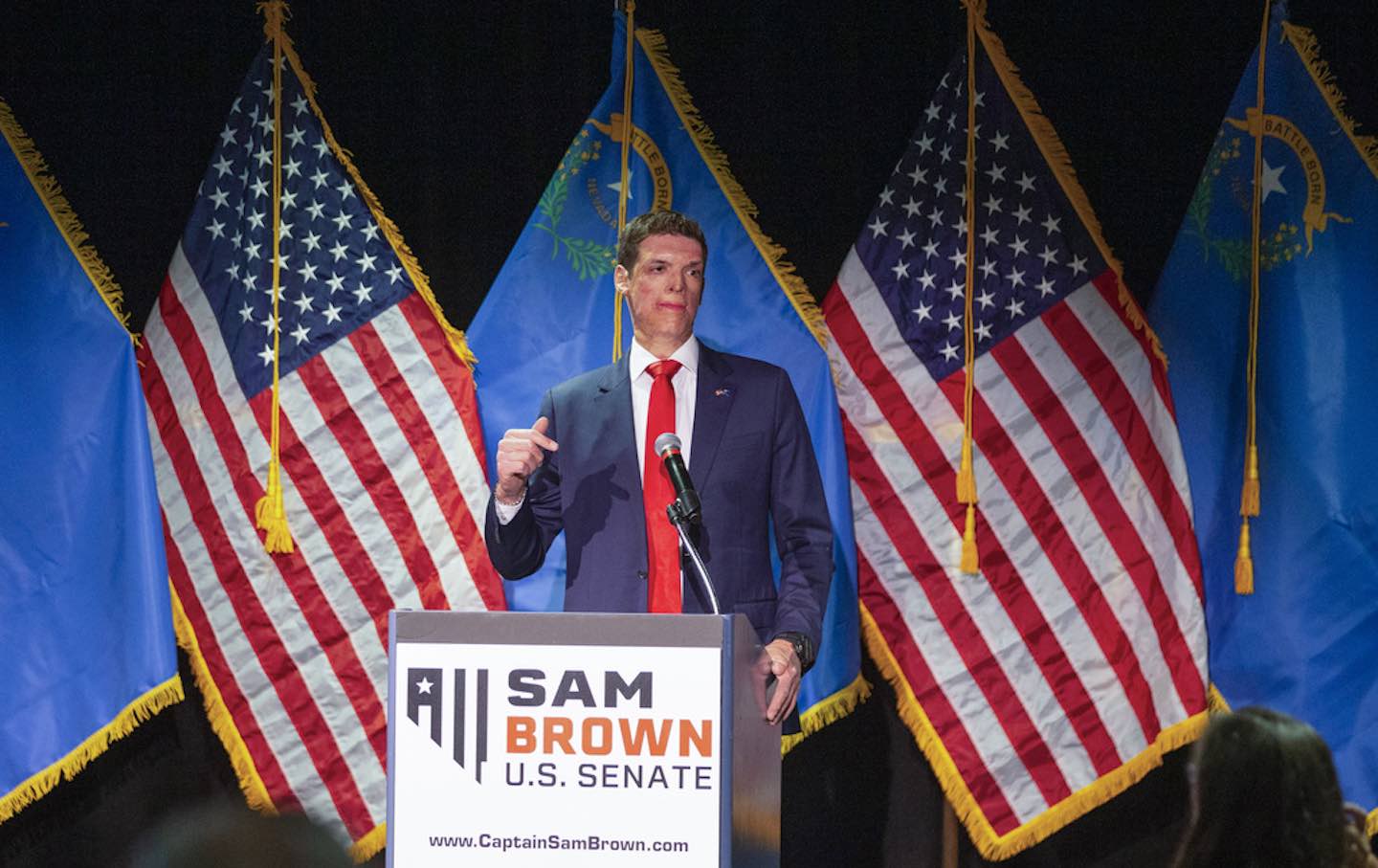
Sam Brown will face incumbent Democratic Senator Jacky Rosen in November, in a state where the outcome remains far from clear.
Left Coast
/
Sasha Abramsky
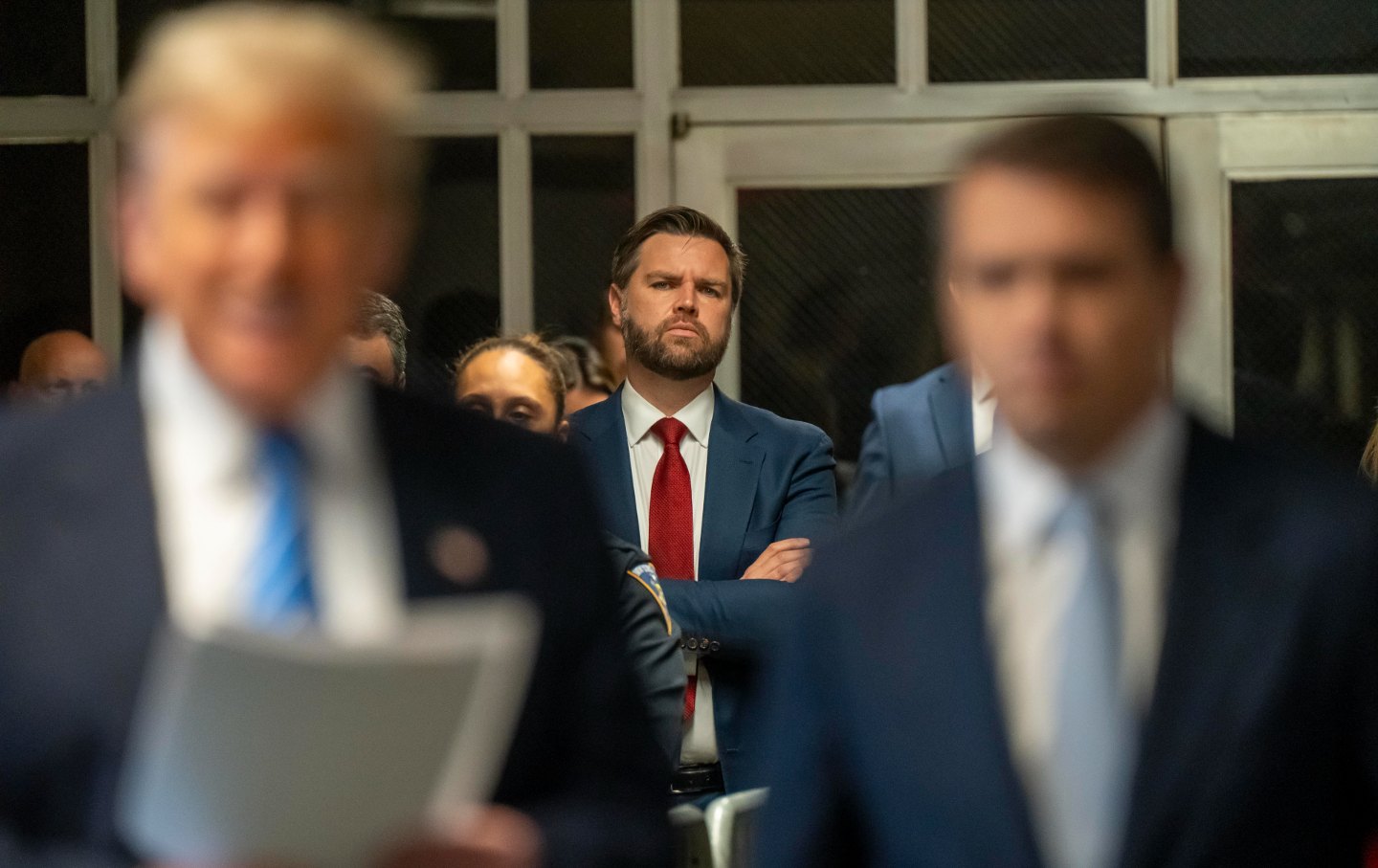
As long as you ultimately kiss the ring, you get total absolution in Trump world. But the junior senator from Ohio has traveled farther than most.
Joan Walsh
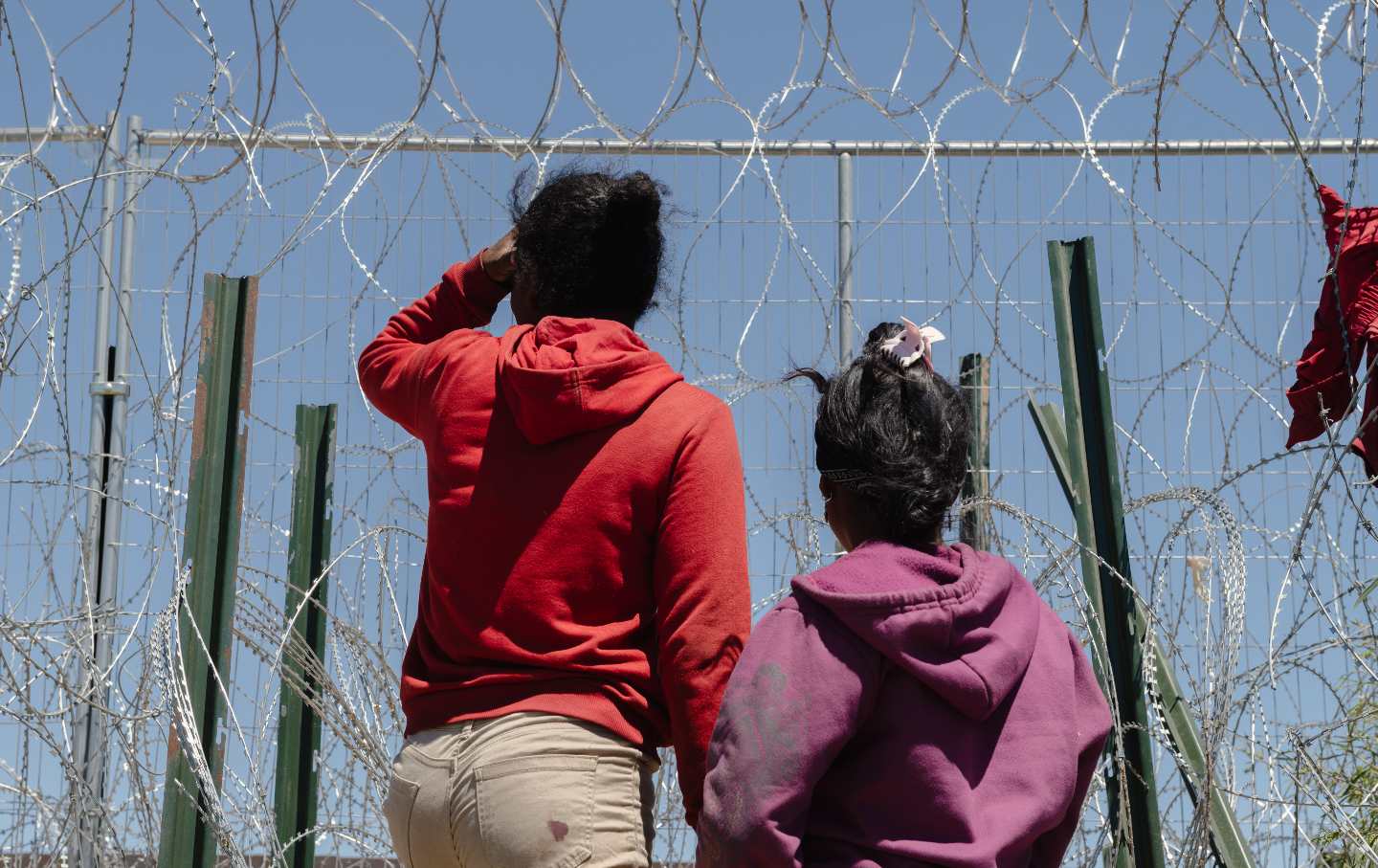
SB 4, which the ACLU called one of the most extreme pieces of anti-immigrant legislation ever enacted, would give Texas police the power to engage in immigration enforcement.
StudentNation
/
Lajward Zahra
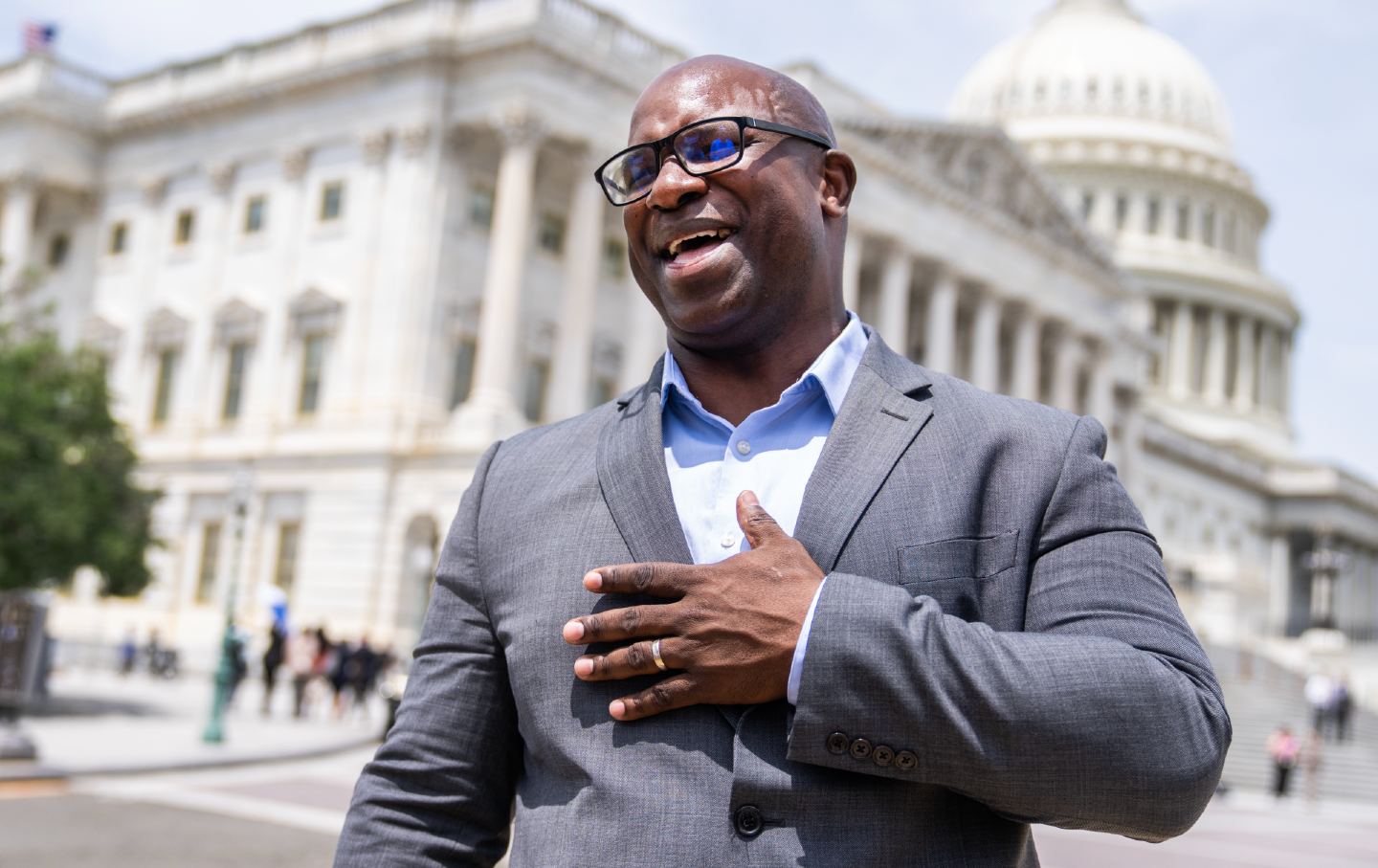
The pro-Israel lobbying group is spending millions to oust the New York congressman, but Bowman has “people power.”
Hadas Thier
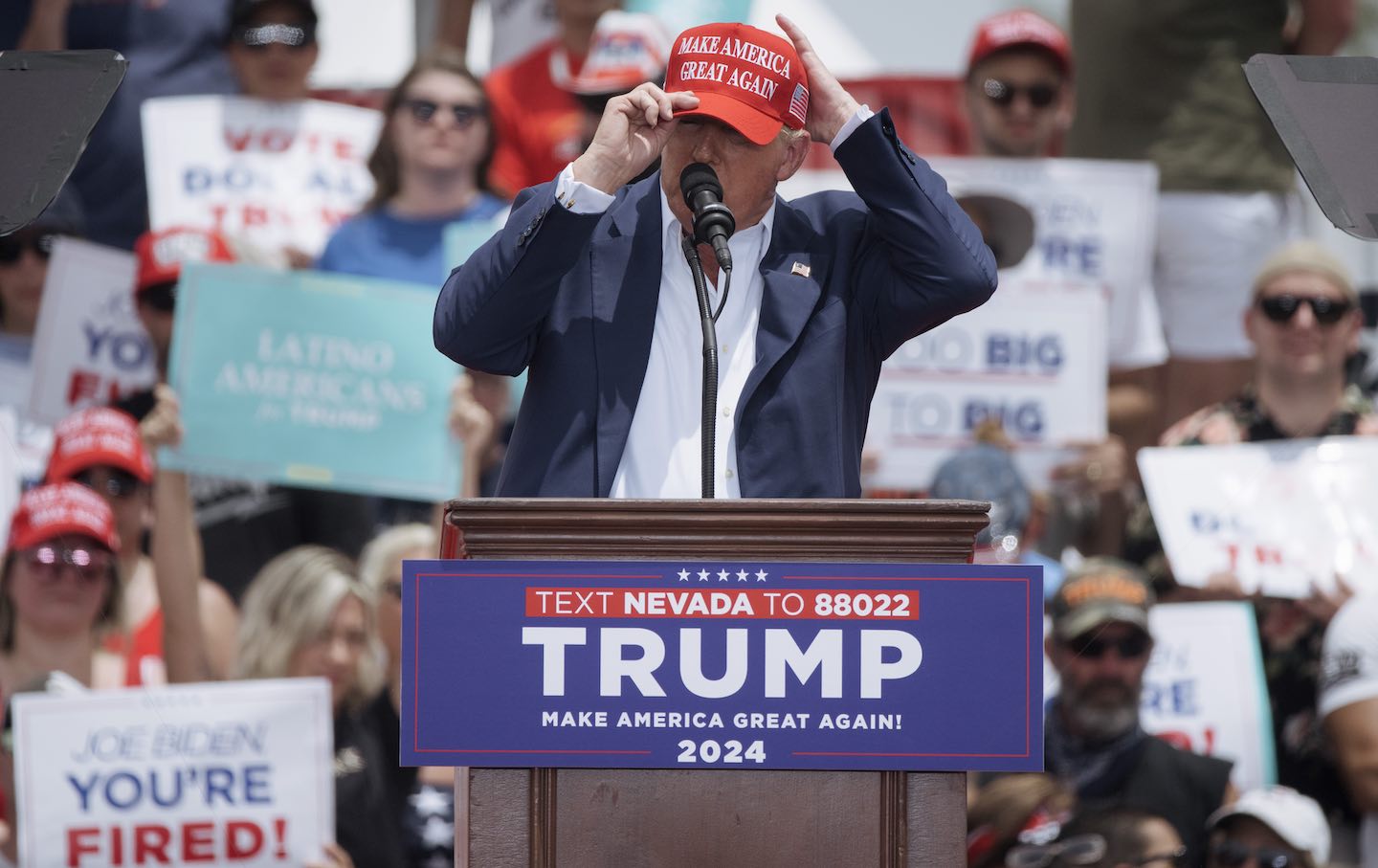
The former president’s rants are more incoherent than ever. But he doesn’t need to make sense to keep his followers in the tank.
Chris Lehmann
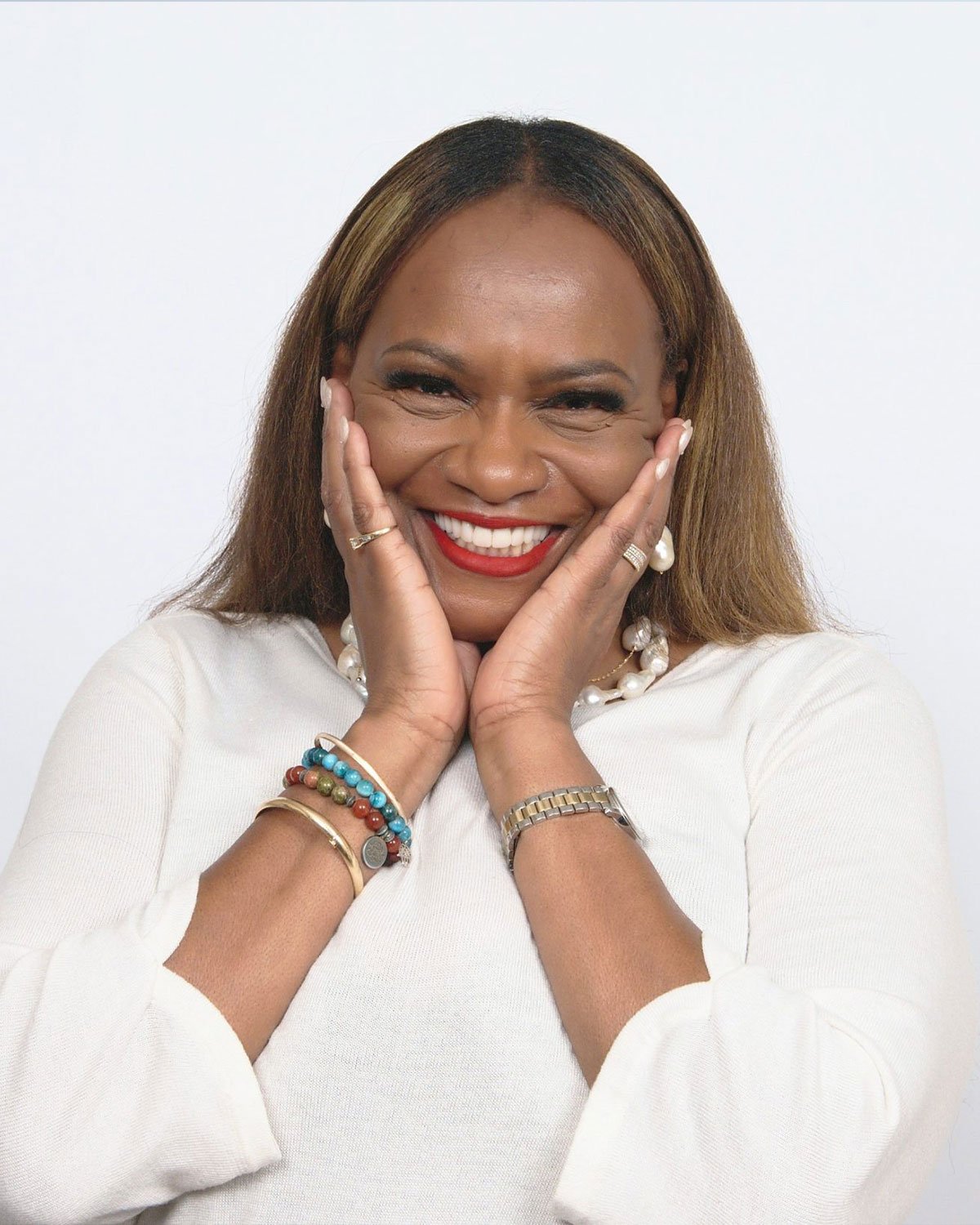
Felecia Phillips Ollie DD (h.c.) is the inspiring leader and founder of The Equality Network LLC (TEN). With a background in coaching, travel, and a career in news, Felecia brings a unique perspective to promoting diversity and inclusion. Holding a Bachelor’s Degree in English/Communications, she is passionate about creating a more inclusive future. From graduating from Mississippi Valley State University to leading initiatives like the Washington State Department of Ecology’s Equal Employment Opportunity Program, Felecia is dedicated to making a positive impact. Join her journey on our blog as she shares insights and leads the charge for equity through The Equality Network.


